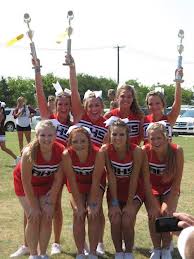
Friday, April 5, 2013

Eye On The Prize

Determining team goals and how you can reach them

One of the most important things for a team to do is setgoals.  They need to have something that they are working toward collectively. Working together for a common goal will bring them together as a team and a family and it may just teach them the importance of helping each other.  As a long time coach, I have seen teams work hard and reach goals and I have seen them fall short.  At the end of the day the important piece was how hard they worked and what they learned.  Here are a list of team goals that my teams have worked toward in the last few years:
  • Recruit more cheerleaders to the program
  • Do well at competition
  • Don’t drop any stunts during games
  • Know ALL game/performance material two weeks before the game/performance
  • Don’t lose any team members to grades or injury
  • Cheer for more sports than just Football and Basketball
  • No team drama
  • Full squad tumbling
  • Elite stunts before the first game

Some of the goals they accomplished and some they did not.  Some stay on the list year afteryear and some come and go based on the team. Each team is different and each team member should be directly involved in determining that seasons goals.  In order to accomplish a team goal, everyone on the team needs to agree on it. 

One question that I am asked by newer coaches is how to determine realistic team goals.  Most everyone can come up with a list of things we would “like” to accomplish in a set amount oftime, but determining which goals will be accomplished is more difficult.

At one of the earliest practices or summer meetings, I sit down with the team and discuss the previous year.  Get their opinions on what worked and what didn't.  Talk about everything from cheers and chants, stunts and performances, study hall, practice times, team rule expectations, everything.  Make lists or divide things into good and bad columns. For some of the things that they liked or felt that were good, see if there is something that you could do better. For instance, if your team accomplished not losing any team members the year before to poor grades, can we make it a goal this year that not only do wenot lose anyone, but that everyone on the team has a 3.0 GPA?

For the items on the bad list, determine how to move those things to the good list.  If your team was unsuccessful at promoting sporting events and games, you could make a goal that they make all signs and banners before the season starts, or get friends and family at every event they attend. If it is stunt related, determine why the stunt was not good and set a goal to work the skills and conditioning required to hit the stunt.

Other ways to find viable goals for your team is have them watch other teams or talk to other coaches and see what other schools do.  Look at the traditions of other squads.  There may be something that your team would like to incorporate.  You may see some crowd involvement cheers or dances that another school does with their crowd.  They might also have fundraisers or community service projects that your team would like to try. 

For performance-based goals, assign homework to the squad that they have to go online and find at least one new skill, dance or chant to try to incorporate into their skill set. As a coach, determine the skill level, and as they progress through the season have them attempt the skills they are ready for.

Once you have your list of 5-10 team goals (depending on season length).  Write them down andgive team members a copy.  Make a poster for your practice area so that they can see the goals at all times.  Once you have this list discuss with the team the steps you need to accomplish each goal.  Map it out and break it into smaller chunks.  This will help them to see progress and determine what they need to do individually to help the team achieve itsgoal.  Track your progress EVERYDAY.  Take time at the beginning and end of practice to discuss goal progress. Use a check list or make notes on your master sign.  Make sure that you acknowledge all progress in favor of a goal.  If a goal is completed, make a huge deal about it! Reward them with something fun and praise them for their hard work.  If the coach, the athletes and the families get involved then everyone is rewarded when a goal is completed.  Make the goal fun and make the reward worth earning and you will have great success.

*\o/* 
CW3

Thursday, April 4, 2013

Don't Forget the Sunscreen!


Preparing for Cheer Camp

You have done the paperwork, hosted tryouts and selected a team.  You have ordered uniforms and started fundraising… Now What?  For most cheer squads, summer is time to attend cheer camp! 2, 3 or four days of sweltering heat and loud, screaming cheerleaders!!  YAY! 

There are MANY different types of camps you can participate in:
  • Private Camps - Where a staff will come to you and work directly with your squad for 2-4 days and focus on your squads specific needs.
  • Commuter Camps - This is usually in your town, or close to it and you go for a few hours a day and go home each night. 
  •  Overnight Camps – These are usually held at a college and are typically all-inclusive.  You stay in dorms, eat at the cafeteria on campus and have classes from 9am to 7pm. 
  •  Resort camps - These are very much like the overnight camps, but you get down time to hang out on the beach, pool, or theme park depending on where you have chosen to go.

Once you have decided on camp, there is still a list of things that you should do with your team to make your camp experience the best it can be. 

First, have a team meeting and go over the expectations of the camp you have chosen.  Let them know what the hours will be and where they will need to be each day.  Take time to review the daily schedules, the classes offered, the awards and how to earn them.  Discuss team and individual goals and what your expectations are of them from a coaching and school standpoint. 

If you are attending a commuter camp or hosting a private camp, discuss travel and meeting times.  You will also be responsible for your own food, so plan accordingly.  Make sure they know to bring money or a lunch. 

Plan what you will wear each day.  It is usually not required, but easier to identify your team if they are dressed alike.  Most squads go with matching shirts and shorts.  Some teams go all out and have custom shirts, shorts, bows and sometimes matching socks.  Just make sure that your team knows what the dress code and team expectations are for what to wear.

It might be a good idea to meet a few times and practice all together before you attend your camp.  It will make team bonding easier if the girls already have an idea of the team dynamic.  Camp is not the time to discover that Suzie and Sally have hated each other since kindergarten and now the camp staff wants them to stunt together.  Take the time to do some team bonding games, get to know you games, etc.  It will pay off in the end. 

Learning cheers and chants together BEFORE you go to camp is helpful too.  It will show you who your strongest cheerleaders are and who can help the newer or less experienced teammates.

Physically you should introduce them to the skills and drills that they will see at camp as well. 
  • Make sure that they under stand what a warm-up is and how to stretch. 
  •  Work on basic motions and jumps and know the terminology of these skills. 
  •  Have them work on some conditioning skills and calisthenics so that their bodies are ready for the stresses of camp. 
  •  Have them work on the basic core stunts.  Climbing drills, weight transfer and strength.  Doing this will allow them to move quicker in the stunt classes and help them learn more during your camp time.

Know your camp. 
If you are attending a camp that offers a home cheer or dance evaluation make sure that you put something together and are not just sitting around while other teams are performing. 

Look at the class list.  If your camp offers Captains Classes, make sure that you have elected captains or have determined who will attend.  You do not want your team missing information offered in these classes.  You may also want to divide your team up when they get there.  If you have some great dancers send them to a dance class while a stunt group goes to the basket toss class.  You will get the most out of what is offered and come back and teach each other.

As a coach, there are things that YOU should be prepared for as well. 
Make sure you do all your paperwork.  Fill out the registration forms and get the medical release forms to your team.  Know when the fees and medical releases are due.  If you do not receive a confirmation packet from your camp director, make sure that you contact them. 

Most of the time coaches sit around and watch the staff teach.  Make sure that you bring something comfortable to sit on and something to read or do.  Seven hours in the bleachers can make for sore bodies! 

Don’t forget the first aid kit! Some camps have a trainer on site, but just in case bring yours.  Make sure you have a good supply of band-aids, ice packs, Tylenol (check with parents first), girly supplies and athletic tape.  I usually pack extra granola bars, contact lens cases and fluid, scissors and sunscreen.

Camp can be the highlight of your summer, or its demise.  Teach your kids how to stay patient and learn as much as they can.  It will be hot, they will get frustrated and they will be tired and sore.  However, they will also learn enough for the whole season, make good friends and be able to support their school in new and exciting ways if they make it fun.

CHEERS!
 *\o/* 
CW3 

Wednesday, April 3, 2013

Crowd Control


The Cheerleaders job, as we pointed out in a previous post, is “to lead and motivate crowds at a sporting event.”  If a crowd starts to get unruly and starts yelling inappropriate comments at Referees, Coaches or the other team and its fans, cheerleaders to try to contain or control the situation so it does not get out of hand. 

I teach my teams to be aware of the crowd environment and cheer accordingly.  If the crowd is high energy then we need to focus on cheers that will keep them yelling with us.  We do cheers and chants that the crowd will participate in.  If they are yelling with us, they are not yelling anything inappropriate.  All of our cheers and chants cheer for our team, not against the other team.  We do not do B-E-A-T cheers or cheers that have negative connotation towards the other team.  Our cheers focus on win, score, defense and pumping up the team.

Sometimes the crowd yells things directly at the Referees or they make negative comments about the other team in general.  When this happens, I have my team start chants that are loud and will hopefully get the crowd yelling with them.  Cheers that contain lots of stomping and repeating back are a good choice. I try to get them to be louder than the one or two fans that are causing the problem.  This will keep the referees from hearing the offending fans.  It also shows the Referees that we are making an effort to keep our fans at bay and not supporting the problem.

The last tool that my teams have to corralling the fans is their timeout and quarter break performances.  At our school, the crowd prefers the dancing, stunting and tumbling to cheers and chants.  Almost all of our timeouts include these pieces.  My cheerleaders are trained to take the floor immediately after the buzzer rings for the quarter break or as soon as the Referee makes the call for the full time out.  If they are rallying onto the floor and making noise, the crowd has less opportunity to make negative comments in the down time of a game.  We remove the opportunity for the offending crowd member to have an audience. 

As a coach, I also have a responsibility to crowd control.  I am the one sitting in the stands by the cheerleaders and I am usually aware of what the crowds are saying.  Being at the school for as long as I have, many of the students and parents know me so I can usually make eye contact or go talk to the person that is a problem.  If I don’t know a student or don’t feel comfortable talking to them I usually bring it to the attention of the administrator or in our case a school police officer.

We also have a unique mascot at our school.  Very well known in the community and even has his own Facebook page.  He has posted “student section rules.”  They are guidelines to how we are supposed to act, what we wear and even about being on time!  The rules are written in a funny way, but are taken seriously by the student body.  (I can send them to you if you are interested.)  Building a good rapport with your fans and leading by example will be a good start to crowd control.  The bottom line is that we want the sporting experience to be a good one for everyone.  It is going to get exciting and the fans are going to get heated and obnoxious, but if we all work together, we can keep it fun!

CHEERS!
*\o/* 
CW3
www.readysetyoubet.blogspot.com

Tuesday, April 2, 2013

Back to Basics


The original purpose of sideline cheerleaders is to lead and motivate a crowd of fans at a sporting event.  Cheerleaders have various tools to accomplish this task.  They can use Cheers, Chants, Dancing, Stunts and Tumbling.  For safety purposes, we do not stunt or tumble while a ball is in play nor does the band or music play.  Because of this, Cheerleaders lose some of their tools.  This brings us to the ‘bread and butter’ of what sideline cheerleaders do – Cheer. They stand on the sidelines in front of a crowd and using a combination of motions, jumps and yells they keep the crowd engaged in the game and supporting their team.

Most people outside of the cheer world (and some that are in it) are not aware that there is a difference between cheers and chants.  A chant is a short phrase or a few short phrases that repeat.  “Go Big Blue” or “Lets Go Lions” would be something you may have heard at games.  They are usually done with simple sharp motions and can be effective in getting the crowd motivated. 

A cheer is longer, more like a story.  It usually addresses the crowd, tells them what to say, when to say it and then asks them to repeat it.  “Tiger fans up in the stands, we wanna hear you yell!  We say blue and you say gold, Blue, Gold! Blue, Gold!”  In this cheer, each line would only be said once and have specific.  The Blue, Gold portion of the cheer would be repeated by the cheerleaders and crowd. Almost all cheers and chants use stiff motions to punctuate words.  Some also incorporate jumps to highlight certain parts.

Many times when I watch cheerleaders at games, they do not look crisp and sharp on the cheers and chants.  This tells me that there is not enough time dedicated at practice to making the basics look good.  When we break down a football or basketball game and look at the actual time spent cheering versus the time spent performing dances, stunts and tumbling it tells a lot.  A quarter is typically 12 minutes long, a quarter break is 1-2 minutes and halftime is between 1- 15 minutes.  That means that 48 minutes (or more) of a game will be cheers and chants and only 18-20 minutes are for stunting and performing dances.  Yet, in a 2 hour practice coaches tend to spend only 30-40 minutes on cheers, chants, motions and jumps while they can spend an hour or more working on stunts and tumbling.


I don’t want to say that less time should be spent on stunts and tumbling, but it would be great to see coaches emphasize that the basics look just as good.  For safety purposes we need to spend time on the more athletic elements and we need to make sure that what the crowd sees most of is equally as good.  Stunts and Tumbling are what the kids and the crowd focus on, but making sure that the cheers and chants are good it what makes a cheer squad great.  Make sure that the motions are sharp and strong. Work on core strength and flexibility to make those jumps higher and more graceful. Don’t neglect your voice work at practice either.  Learn to yell from your diaphragm and not your throat to save your voice and be louder.  You should practice yelling in the stadium or crowded gym to see how loud you really need to be. Concentrate on chopping your words and not singing so that the crowd can understand and have a better chance to yell with you. 

Making sure that your cheerleaders have the complete package will make them successful.  Cheerleaders that are focused on one element get tedious because we never use just one element in cheerleading.  Your crowd may or may not notice the time and effort spent on being a well rounded team, but you will know and they will have a better understanding of how to budget their time. 

If you are in need of skill drills for motions, jumps or conditioning, please feel free to contact me or you can find lots of great information online.

 CHEERS!


*\o/* CW3 www.readysetyoubet.blogspot.com

Monday, April 1, 2013

All Aboard!

Today is the first day of the 2013 A to Z Challenge! I am excited to participate in the challenge this year. Last year I made it all the way through and it was such a great learning experience for me. I learned a lot about myself and what I need to work on as a coach and as a writer. I am looking forward to taking those experiences and sharing what I have learned so that other coaches and cheerleaders can learn from my mistakes and failures. Even after 18 years of coaching and mentoring, I continue to learn and grow each time I work with a new group of athletes.

Cheerleading is constantly evolving and changing. A good coach takes a lot of time and energy to keep up with the safety side and the trendy side all while keeping the kids interested. Thank goodness for an understanding husband!

I have planned out most of my posts and only a few are repeats from last year. The ones I will be repeating are the most popular topics that I think I could elaborate on to provide more information or present a topic in a different way.

I hope that you will follow my journey over the next thirty days. If you are already a coach, I hope that you take some positive information from it. If you are not a coach or involved in cheerleading, I hope that you gain a little insight into the wonderful world of spirit leaders.

Best of luck to my compadres that are also starting on their A to Z journey today!

Friday, March 29, 2013

How to become a Cheer Loser

I was digging through some old cheer files and found this humorous article and thought I should share it with you!

Is your goal to be a Cheer Loser? Would you like to disgrace the activity of cheerleading forever? Do you want to be kicked off the squad? Is your dream to be attacked by a mob of angry, hard-working Cheerleaders? Here's how to do it.
1. Have an attitude problem
Be sure to act like everyone ELSE has a problem and not you. Yell at the coach. Refuse to comply with rules. Show up late to practice every day. Wear lots of jewelry, and refuse to work too hard because you might break a nail.
2. Ignore criticism
Why would people be criticizing you? You're perfect just the way you are! So don't listen to a word the coach or your teammates say. Your way is the best way. Be sure to criticize others, though. This especially works when you criticize someone for something you can't do.
3. Think you're better than everyone else
Of course YOU'RE better than anyone who is not a cheerleader, after all, you get to prance around in a short skirt. Stick your nose way up high in the air and scoff at those girls who didn't make the team.
4. Be a show-off
Practice all your cute, snappy cheers in public. At the mall, at parties, even at McDonald's  Of course everyone around you is interested in your latest Touchdown cheer! Talk about cheerleading practice in a loud voice. Oh, and if you can wear your full uniform around, that makes it even better.
5. Say bad things about your team members behind their backs
Saying bad things about your teammates makes YOU look better! Be sure to spread around lots of true and untrue stories, but make sure you always end up sounding like the star. If you can get a few of your teammates in tears, then you know you did a good job.
6. Loaf around at practice
What do you need to practice for? All you need to do is look cute on the sidelines. So skip the sit-ups, the push-ups and the stretching. Practice time could be better spent doing each other's hair and spiffing up the uniforms.
7. Fulfill all the cheerleading stereotypes
Make Britney Spears proud! Show off your belly with some super tight low-slung jeans and a bathing-suit top. Roll the top of your cheerleading skirt up so it's shorter. Act like a total ditz. Wear heavy makeup and kiss as many guys as you can. Who needs a good reputation?
8. Kiss up to the coach
Hey, you're not the star of the team so you gotta stay on somehow! The best way to do this is to kiss up to the coach! Offer to help her grade papers, carry groceries, even follow her home and do her laundry! Compliment the coach on every decision she makes. Tell her bad things about the other girls on the team. Oh, and it doesn't hurt to kiss up to the captain either.
9. Buy all the Cheerleading stuff you can
Load up on everything with the world "cheerleader" on it so everyone knows that you're a cheerleader. Buy pom-pons and hang them off your backpack. Buy dozens and dozens of shirts with megaphones on them and wear them everywhere. Wear your cheerleading jacket over your pajamas. Buy cheerleader-style skirts. Make sure your pens and notebooks say "Spirit Leader" all over them. Once people know you're a cheerleader, they're sure to think you're super-cool.
10. Aim for bad grades
Don't spend any time studying. Instead, talk on the phone and party with your friends. Instead of reviewing for the Constitution test, practice your homecoming queen acceptance speech. Who needs school? While all of your friends are off at college, cheering on the college squads and getting a degree, you can be working on your Burger King smile! Charm and good looks will be enough to get you at least $5.15 an hour!

If you do 1 to 3 of these things, you're on your way to being a Cheer Loser! You'll be despised by all self-respecting, hardworking cheerleaders! If you do 4-6 of these things you're already halfway to Loserdom and you don't have much further to go! If you do 7-9 of these things you're a Cheer Loser Diva and you're one step away from kissing your cheerleading career goodbye. If you do all 10, congratulations! You've just been kicked off the squad!
Author: Sunni Schulz Pieschala
Published on: June 11, 2004

*\o/* CW3 www.readysetyoubet.blogspot.com

Sunday, September 16, 2012

Evaluating Rules

It has been four and a half months since my last post.  I would like to say that I have a great reason for not writing.  The real reason is that I was overwhelmed at the cheer season starting and a little bit lazy.  The 30-day challenge made it easy to write because it had a focus and a goal for each day.  Unbelievably even after 17 years of coaching, I still learn something new every day that I am coaching.

My topic for today is Rules.  When setting your team rules, make sure that you are setting rules that you intend on enforcing.  Recently I placed in a position where I had to enforce a team rule that involved removing a cheerleader from my team.  I tell my cheerleaders and parents that the rules are there for a reason.  We have developed the team rules to protect the students, maintain the integrity of the program and keep everyone on the right track.  My team rules can be summed up as common sense.  I expect them to try their best, to work hard, to show up, stay out of trouble and maintain good a standing as students in their classes. 

The issue was a cheerleader got in an altercation with a student from another school.  The cheerleader was one that has a good home life, works hard at practice, is a good student and has lots of potential as a cheerleader.  Unfortunately, she made a poor choice and as a coach, I had to do the right thing and remove her.  It was hard on both of us.  I understand that students can make mistakes and I believe in my heart that she will learn this lesson and come tryout again with a better grasp on her emotions and what is important in her life.

Enforcing the rule made me look at myself as a coach and evaluate (again) what we are really teaching.  Yes, our main focus is to teach our athletes how to be cheerleaders.  Motions, Jumps, Cheers, Stunts, Tumbling, Leadership, etc.  However, the other part is teaching them how to be contributing members of society.  The rules that I set each year are rules that are good to follow throughout life.  Try your best, work hard, show up, stay out of trouble and maintain a good standing as a student, employee, leader, etc.  High school is about so much more than the education.  We learn how to interact with our peers and our teachers who later evolve into co-workers and bosses. 

I will be keeping the rules as they stand.  I think that it was an important lesson for the cheerleader and the rest of her team to learn.  She was a major part of the team and they had to come together to rework routines and formations with one less cheerleader.  They worked hard and went to the game the following day and did great.  If one did not know there were supposed to be 16 on the field instead of 15, you would not know that there was ever an issue.  For that I am proud of them. 

I mentioned that I had to re-evaluate myself as a coach, again.  I say this because each day I take a step back and look at what we did and ask myself if I was effective, what I could do better, and how to handle each day in the future.  The parents and cheerleaders may not appreciate it now, but someday when the kids are grown and they remember the lesson learned, good or bad.  They will understand.

Cheers!
*\o/*
CW3
www.readysetyoubet.blogspot.com